Compiled and Documented by:
Sa'ad Abdullahi Abubakar Al-Mūthāqqaf
(Department of Islamic Studies,
Al-Hikmah University, Ilorin, Kwara State
21st June 2025
Biography of Maolana Fadilat Sheikh-ul-Akbar Alhaji Hamzat Salman Agbarigidoma (1916–2014)
Maolana Fadilat Sheikh-ul-Akbar As-Sirrul Faedat, Alhaji Hamzat Salman Agbarigidoma, was born in 1334 A.H. / 1916 C.E., into a renowned scholarly lineage at Agbarigidoma Compound, Alore Area, Ilorin, Kwara State, Nigeria. He emerged as one of the leading figures in West African Islamic scholarship, jurisprudence, and Sufism, particularly within the Tijaniyya Order. His life embodied the fusion of Islamic knowledge, spiritual discipline, and da‘wah (propagation).
- Early Life and Upbringing
Sheikh Hamzat was born into a devout Muslim family steeped in Islamic spirituality and traditional scholarship. His formative years were shaped by the Islamic institutions of Ilorin, notably the zāwiyah (spiritual lodge) systems at Pakata and Adangba, which he frequented alongside his father. By the age of seven, he had committed to memory Jawharat al-Kamāl, a key liturgical text in the Tijaniyya Sufi tradition, thus marking the beginning of a lifelong journey in Islamic learning and spiritual development.
- Pursuit of Islamic Education
Sheikh Hamzat’s formal Islamic education began under Sheikh Muhammad Al-Ameen, popularly known as Alfa Iya Kewu, with whom he completed the memorization of the Holy Qur’an. His quest for deeper knowledge in ‘ibādāt (acts of worship) and ṭarīqah (Sufi practices) led him to study under Sheikh Muhammad Bashar Adangba Al-Ilory, a revered Sufi master with whom he spent over a decade in spiritual and intellectual companionship.
Furthering his pursuit of knowledge, Sheikh Hamzat studied under Alfa Ishola, a distinguished scholar in Kwara State, through whom he attained mastery in fiqh (Islamic jurisprudence) and adab (Islamic ethics). His academic odyssey took him to Ogbomosho, where he learned from Mallam Muhammad Nasiru of Oke-Elerin. There, he immersed himself in critical Islamic texts such as Dalā’il al-Khayrāt, Qaṣīdat al-Burda, Al-Wasā’il, and Madh al-Nabiyy.
He later studied with Shaikh Huzaifa bn Imam Jamiu of Ogbomosho for five years, receiving instruction across multiple disciplines in Islamic scholarship. His exceptional dedication earned him several ijāzāt (scholarly authorizations), awrad (spiritual litanies), and adhkār (divine invocations).
He also undertook an intensive review of Maqāmāt al-Kharīriyyah under the guidance of his elder brother, Fadilat Sheikh Abubakr Agbarigidoma, completing the revision in just fourteen days—a testament to his scholarly aptitude and spiritual focus.
- Engagement with Sufism and the Tijaniyya Order
A central dimension of Sheikh Hamzat’s legacy is his profound engagement with Sufism. Rooted in the Tijaniyya Order, his spiritual formation was influenced heavily by his early mentors, particularly Sheikh Muhammad Bashar Adangba. He received his formal initiation (ijāzah) into the Tijaniyya Path, authorizing him to engage in and transmit the awrad of Sheikh Ahmad al-Tijānī.
His Sufi journey brought him into contact with numerous leading Tijani scholars:
Mallam Yahuza conferred on him the title of Muqaddam.
Sheikh Muhammad Thanniy Maisereniyyah granted him advanced litanies, with approval from Sheikh Abubakr Atiku Al-Kanawy.
Sheikh Ahmad Abul Fathi Al-Yaruwawiy bestowed upon him the Silsilat al-Aghwāth (spiritual chain of the elect), symbolizing his elevated spiritual rank.
- Affiliation with Shaikh Ibrahim Niyass Al-Kawlakhī
Sheikh Hamzat maintained a close affiliation with the global Tijani leader, Sheikh Ibrahim Niyass of Kaolack, Senegal, and his senior disciple Sheikh Sanni Awwal. His fluency in Hausa and familiarity with Northern Nigerian landscapes made him a valuable companion during a sensitive mission alongside Sheikh Ahmad Tijani Niyass, son of Sheikh Ibrahim, to Kano.
Upon return to Senegal, Sheikh Ahmad Tijani recounted the mission to his father, Sheikh Ibrahim Niyass, who, recognizing Sheikh Hamzat’s spiritual pedigree and loyalty to the Tijani cause, conferred upon him a silsilah (spiritual chain) as a mark of his designation as Khalifah (spiritual representative).
- Travels and Preaching Activities
A tireless preacher and missionary, Sheikh Hamzat traversed wide geographical regions within and beyond Nigeria. He visited spiritual and scholarly centers such as Kaolakh, Faz, and Chotta, and performed the Hajj pilgrimage to Mecca on seven occasions, each time accompanied by his disciples.
He played a pivotal role in the establishment of zāwiyahs across various Nigerian cities including Enugu, Benin, Kano, Kaduna, and Borno. These centers became vital platforms for Islamic propagation, Sufi instruction, and community development.
- Literary Contributions
Sheikh Hamzat was a prolific writer whose literary legacy spans poetry, theology, jurisprudence, and spiritual exhortation. His major works include:
1. Takhmīs Dawāwīn Sitta – A detailed commentary on the Dīwān of Sheikh Ibrahim Niyass.
2. Afdal al-Riḥlah – A treatise on the religious significance of the Mawlid al-Nabawī (Prophet’s birthday).
3. ʿAwn al-Muftī – An exegetical work on the importance of Basmala and Sūrat al-Fātiḥah in ritual prayer.
4. Hadīyat al-Fayd li Ḥabbāb al-Fayd – A compilation of devotional poems and supplications.
5. Qaṣāʾid Riyāḍ al-ʿĀrifīn- Spiritual verses tailored for dhikr and spiritual reflection.
These texts have continued to shape both academic and spiritual discourse among his followers and in Tijani circles across West Africa.
- Legacy and Conclusion
Maolana Sheikh Hamzat Salman Agbarigidoma’s life and works remain a monumental contribution to Islamic scholarship, Sufism, and da‘wah in Nigeria and beyond. His intellectual clarity, spiritual depth, and unwavering commitment to the Tijaniyya Order solidified his status as a leading figure of his time.
His enduring legacy is preserved through the educational and spiritual institutions he founded, the numerous disciples he mentored, and the corpus of literature he produced. He remains a source of inspiration for contemporary Islamic scholars and spiritual seekers alike.
May Allah, the Exalted, continue to envelop his soul in Divine mercy and reward his tireless service to Islam and humanity.
..........................................
Compiled and Documented by:
Sa'ad Abdullahi Abubakar Al-Mūthāqqaf
Great-grandson of Shaykh Sa’adu-Dīn Alfa Koro
A Student in the Department of Islamic Studies,
Al-Hikmah University, Ilorin, Kwara State
 b
b
21st June 2025
SŪFĪ LITERATURE COLLECTION (ENGLISH COLLECTION)

1. Majmū’at ad-Dawāwīn (Collection of Praise Works) by Shaikh Ibrahim Niasse [Contains (8 Dīwans): Dawāwīn as-Sitt (Six Dīwāns, Nūr al-Haqq & Sayrul Qalb], Arabic text and English translation by Dr. Awwal Baba Taofiq
2. Rihlat Kunakriyyah (A Trip To Conakry). By Shaykh Ibrahim Niasse. Translated by Khalifah Awwal Baba Taofiq
3. Dalā’il al-khairāt wa Shuwāriq al-Anwār fī Dhikr as-Salāt ‘alā-n Nabiyy al-Mukhtār (The Indices of Virtues/The Waymarks of Benefits and the Brilliant Burst of Sunshine in the Invocation of Allah’s Blessing on the Chosen Prophet) by Imām Sulaimān Jazūlī [Arabic text, Translation, Transliteration by Alhaji Marooph Raji]
4. The Icon of Mystics: Shaykh Ibrahim Niasse Al-Kawlakhy [by Dr. Awwal Baba Taofiq]
5. Who is this Shaikh: Shaikh Ibrahim Niasse Al-Kaolacky [by Dr. Awwal Baba Taofiq
6. Spiritual Flood (Alūfu-l Khalqi Ma'lūf), by Shaykh 'Abdul-Quadr ibn 'Ali Al-Nupewy [Annotated Translation from Arabic info English by Dr. Awwal Baba Taofiq
7. Practical Guide on the Wird(Litany) of the Tariqah Faydah Tijaniyyah (The Adherent Handbook)-(Compiled by Sayyidah Bilqis Grillo
8. Al-Yāqūtatu-l Fareeda Fī Tariqatu-t Tijāniyyah (The Unique Ruby in the Tijānīya Spiritual Path) — Arabic Text, English Translation & Commentary (Written by Sheikh Abdul-Wāhid Muhammad Nazifi. Translated by Jafaru Ibrahim)
9. Shariah and Haqeeqah: In the Light of the Qur'an and the Prophetic Traditions [by Dr. Awwal Baba Taofiq]
10. Al-Khususiyyah: Distinguished Miracles of Shaykh Ibrahim Niasse, by Dr. Awwal Baba Taofiq

g
11. The Jafariya Sufi Order in Nigeria, by Dr. Khalifa Awwal Baba Taofiq
Email: SmilebakGlobalEmporium@gmail.com
WRITINGS OF SHAYKH IBRAHIM NIASSE (ARABIC VOLUMES COLLECTION)
✓ Fī Riyādh at-Tafsīr lil Qur’ān al-Karīm (In the Meadows of Tafsir/Exegesis for the Noble Quran) - by Shaykh Ibrahim Niasse (Compiled by Muhammad ibn Abdullah Jayjubi at-Tijānī)
—Arabic [10 Volumes]
✓ Majmū'at at-Ta'areef bi-sh Shaykh Ibrāhīm Niasse (Radiya-llahu 'anhu) wa Faydatihi wa Muqaddamīhi [An Encyclopedic Biographical Collection of (the Life & Times of) Shaykh Ibrāhīm Niasse, his Spiritual Flood and his Representatives/Deputies] (Collected by Shaykh Muhammad Ibn Abdullah al-Jayjūbī) - Arabic [9 Volumes]
✓ Āfāqu-sh Shi'ir 'Inda-sh Shaykh Ibrāhīm Niasse [An Encyclopedic Collection of Poems of Shaykh Ibrāhīm Niasse] (Collected by Shaykh Muhammad Ibn Abdullah al-Jayjūbī) Arabic [6 Volumes]
✓ Mawsū‘at al-Athār an-Nathriyya li-Sāhib al-Fayda at-Tijānī ‘Ash-Shaykh Ibrāhīm Niasse al-Kawlakhī (Collection of Prose Writings of the Harbinger of the Tijānī Divine Flood, Baye Niasse) [Compiled by Sīdī Muhammad ibn Abdullah al-Jayjūbī] — 10 Volumes
THE CONDITIONS AND SUPPLICATIONS OF THE TIJANIYYA
(And their Derivation in the Qur’an and the Prophetic Sunnah, A Collection of Traditional Sources)
By: Mathias Eichhorn
Pages: 494
Edition: English-Arabic
ABOUT THE BOOK
This work uses a rational, traditional approach, based on the writings of its greatest Masters, which not only illuminates the principles of Islamic spirituality, but also inspires the soul to a deeper intimacy with Allah.
Contents
1. The Dimension of Guidance
2. The Tijaniyya, the Spiritual Path based Upon the Quran and the Sunna
3. The Conditions of Affiliation
4. The Conditions of the Tijaniyya Mentioned in the Rimah
5. The Ideal Behaviour of the Student and its Benefits
6. The Supplications of the Tijaniyya in Kashf al-Ilbas
Appendix: The Obligatory Supplications of the Tijaniyya
For Enquiries, Contact WhatsApp +2349078376281 or Click👉 wa.me/2349078376281
Email: SmilebakGlobalEmporium@gmail.com
BUGYATU-L MUSTAFĪD LI-SHAR'HI MUNYATU-L MURĪD (AN ASPIRATION REALISED IN THE EXPLANATION OF THE "AIM OF THE DISCIPLE")
By: Shaykh Muhammad bin al-Arabī al-Sa'ih
Translated by: Imām Talut Sulaiman Dawood
Pages: 408
CONTENT OF THE BOOK (BUGHYAH AL-MUSTAFID LI SHARH MUNYAH AL-MURID)
👇👇👇
Bughyat al-Mustafid is one of the most important works on the history and rulings of the Tijani Tariqah. Written by Sidi al-Arabi ibn Sa'ih, nicknamed the "Bukhari of the Path", it summarizes the biographical accounts from Jawahir al-Ma'ānī and codifies the rulings of the path that had been scattered in different locations. The author's critical placement in the history of the path, having met many of the Companions of the Shaykh himself, as well as many of the imminent muqaddams, made him an indispensable source of clarity on many of the issues a Tijani disciple will face while walking the path.
The book also serves as a bridge to longer or more complicated works. It has been said, "If you want to read Jawahir al-Ma'ani, read Bughyat al-Mustafid first." This is because he clarifies some of the issues in Jawahir al-Ma'ani that may lead to a disciple having doubts or some misunderstandings.
For Enquiries, Contact WhatsApp +2349078376281 or Click👉 wa.me/2349078376281
Email: SmilebakGlobalEmporium@gmail.com
QUR'ĀN MUS'HAFS (BARNĀWĪ & KANAWĪ)👇🏾
✓ Qur'ān Mus'haf (Warsh Script), [Kano Calligraphic Manuscript] by Sharif Bala Gabari - with Leather Pouch
✓ Al-Qur’ān al-Kareem bi-l Khatt al-Barnāwī bi-Riwāyat Warsh anni-l Imām Nāfi‘ al-Madanī (The Generous Qur’ān in Barnāwī Calligraphic Script from the War'sh Transmission of Imām Nāfi‘ al-Madanī) - with Leather Pouch
Email: SmilebakGlobalEmporium@gmail.com
NEW PUBLICATION ALERT!!!
👉🏿 The Adhkar of Shaykh Muhammad Amīn: In the Light of the Tarbiyah of Shaykh Ibrahim Niasse (Translation & Commentary of Tanbī al-Ibād alā Mulāzamat al-Awrād of Shaykh Muhammad Amīn Abdullah Okene).
Translation & Commentary by Dr. AbdulAzeez Advise Sadeeq Esq.
👉🏿 Al-Faydu-l Ahmadī fī-l Mawlidi-l Muhammadī (The Aḥmadān Outpouring Concerning The Muhammadan Mawlid) & A Compilation of Mawlid Poems.
By Shaykh al-Islām, al-Hajj Ibrahim Niasse
Translated by Dr. AbdulAzeez Advise Sadeeq Esq.
WRITINGS/PUBLICATIONS OF SHAYKH IBRAHIM NIASSE (AVAILABLE, PLACE YOUR ORDER!)
[Contact WhatsApp +2349078376281 or click 👉🏻https://wa.me/c/2349078376281]

✓ Majmū’at ad-Dawāwīn (Collection of Praise Works) by Shaikh Ibrahim Niasse, Arabic text and English translation by Dr. Awwal Baba Taofiq [Contains (8 Dīwans); Dawāwīn as-Sitt (Six Dīwāns) and Two Extra Dīwān (Nūr al-Haqq & Sayr al-Qalb)]
✓ Rihlat Kunakriyyah (A Trip To Conakry). By Shaykh Ibrahim Niasse. Translated by Khalifah Awwal Baba Taofiq
✓ The Icon of Mystics: Shaykh Ibrahim Niasse Al-Kawlakhy [by Dr. Awwal Baba Taofiq[
✓ Who is this Shaikh “Shaikh Ibrahim Niasse Al-Kaolacky [by Dr. Awwal Baba Taofiq
✓ Shariah and Haqeeqah: In the Light of the Qur'an and the Prophetic Traditions [by Dr. Awwal Baba Taofiq]
✓ Spiritual Flood (Alūfu-l Khalqi Ma'lūf), by Shaykh 'Abdul-Quadr ibn 'Ali Al-Nupewy [Annotated Translation from Arabic info English by Dr. Awwal Baba Taofiq
✓ Handbook for every Tijaniyyat [by Shaikh Ahmad Bello As-Suufi Harazimi]
✓ Practical Guide on the Wird(Litany) of the Tariqah Faydah Tijaniyyah (The Adherent Handbook)-(Compiled by Sayyidah Bilqis Grillo)
✓ Al-Yāqūtatu-l Fareeda Fī Tariqatu-t Tijāniyyah (The Unique Ruby in the Tijānīya Spiritual Path) — *Arabic Text, English Translation & Commentary* (Written by Sheikh Abdul-Wāhid Muhammad Nazifi. Translated by Jafaru Ibrahim)
✓ Qasida al-Hamziyya (Panegyric which contains the Biography & History of Prophet Muḥammad) by Shaykh Muhammad Būsayrī [Translation & Commentary by Ibrahim Jafaru] - Arabic & English
.....for the full catalog of Arabic and English Sufi Books...
...Contact WhatsApp +2349078376281 or click 👉🏿 https://wa.me/c/2349078376281
Email: SmilebakGlobalEmporium@gmail.com
Website: SmilebakGlobal.com
 |
A Practical Guide on the Wird (Litany) of the Tariqah Faydah Tijaniyyah (The Adherent's Handbook)....by Sayyidah Bilqees Bolajoko Grillo at-Tijani
|
*SALAT ALA NABIYY (PRAYER UPON PROPHET) COLLECTION/SERIES*
Available for order and worldwide delivery....
1. It'haful muhtaaj bi tarfat al hajj fi salvation alaa saahibi taaj....by Shaikh Abubakar Atiku
2. Majmuu' kutubu thalatha....by Sheikh Aliyyu Harazim (kano).
3. Jaami'u salawaat alaa nabiyy....by Sheikh Aliyyu Harazim (kano).
4. Sullamu l muhibeena ilaa hadrat khairul mursaleen....by Sheikh Aliyyu Harazim (kano).
5. Salat qadaa'i l hawaa'ij....by Sheikh Aliyyu Harazim (kano).
6. Sirrul asraar fii salaat alaa Jaami'u l anwaar....by Sheikh Aliyyu Harazim (kano).
7. Mataalib al abd fii salaat alaa afdal mash'had....by Seyyid Hussein ibn Ilyas al-harazimi.
8. 'Awaa-idu l barakat fi fawaaidul waraqaat min hadrat Mawlana al-Arif billah Shaykh Aliyyu Harazim
9. Jihazu Sarih of Sheu Gibrima
10. Hizbu suwar al maneehi....by Sheu Gibrima
11. Nataij safar....by Sheu Gibrima
12. Itbaau tazyeel....by Sheu Gibrima
13. Sidratul muntaha....by Sheu Gibrima
14. Tazyeel wa tahaqeeb....by Sheu Gibrima
To order for copies;
Call/Whatsapp: +2349078376281 or +2348034656467
Or click
https://api.whatsapp.com/send?phone=2348034656467
Facebook: www.facebook.com/Ismaeelbakare
Email: smilebak2004@gmail.com
1. Sayyida Fatimat Zahara (The Rose): The Beloved Daughter of the Holy Prophet (SAW) - (by Sayyid Ahmad Bello As-Suufi Harazimi)
2. Sheikh Ahmad Tijani and his Spiritual Path (Tariqat) - (by Sayyid Ahmad Bello As-Suufi Harazimi)
3.Shaykh Ibrahim Niasse's Annual Mawlid Nabiyy Lectures at Senegal - Arabic text & English Translation.
4. Selected Prayer Poems (Qasaa'id) of Shaikh Ibrahim Niasse from Kanzul Masun - Arabic, Transliteration & English Translation.
5. Jawahir Rasail (A Collection of Priceless Expositions via Letters "Letters 1 to 10"): Diamond Sparkles - Arabic text, English Translation and Commentary by Shaykh Ibrahim Niasse
6. Tahniah (Congratulatory Ode) of Shaykh Ibrahim Niasse to the Prophet Muhammad (Part 1) – Selected, Transliterated & Translated by Alhaji Abdul-Quadri Okeneye5. Handbook for Every Tijaniyyat - (Compiled by Sayyid Ahmad Bello As-Suufi Harazimi)
Other available books
1. Tafsir al-Jalalayn...warsh
2. Quran...written in warsh style with hausa leather pouch3.Quran....very old (500years old) handwritten manuscript...written in warsh with hausa leather pouch4. Diya at-Ta’wil fi Ma’ani at-Tanzil (hafs)...Published copy the tafsir by Abdullahi bin Fodio
5. Shifaa Qadi Iyadh (warsh) And many other books are available
To get copies...contact the above links
CLASSICAL QUR'ANIC CALLIGRAPHY & MANUSCRIPTS (Available for order)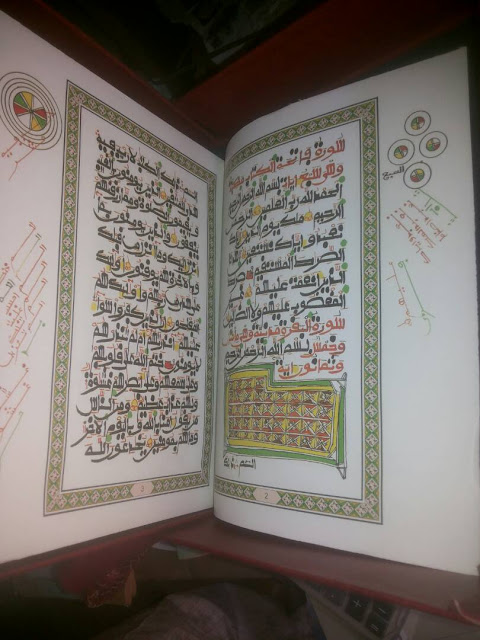


1. Qur’an (warsh) - Handwritten, with Barnawi/Kanawi calligraphic style (neatly wrapped in a leather skin-bag)
2. Qur’an (warsh) - Handwritten (Over centuries old manuscript, loosely bounded in leather case)
3. Qur’an (warsh) - Electronic print
4. Dalail al-khayrat (warsh) - Electronic print
5. Shifaa of Qadhi Iyadh (warsh) - Electronic print
6. Fii Riyadh Tafsir of Sheikh Ibrahim Niasse (7volumes)
7. Majmuu’at at-ta‘areef bi Shaikh Ibrahim Niasse (7volumes)
1. Dala'ilu l khairat of Shaikh Sulaiman Jazuli (Arabic text, Translation, Transliteration by Imam Marooph Raji)
2. Hizbu Sayfi & Hizbul Mughni (Arabic text, Translation, Transliteration by Imam Marooph Raji)
3. Hizbul Bahri (Arabic text, Translation, Transliteration by Imam Marooph Raji)
4. Hizbu Suwar al Manee'hi – ‘Arabic (composed like Hizbu Sayfi)’ (by Shk. Muhammad Gibrima)
5. Sidratul Muntaha ad-daa'een– ‘Arabic’ (by Muhammad Gibrima)
6. Jihazu Sarih – ‘Arabic prayer book on Salatul fat’hi’ (by Shk. Muhammad Gibrima)
7. Tibbul faa'ihi – ‘Arabic prayer book on Salatul fat’hi’ (by Shk. Abdul-Waahid Nazeefii)
8. Nataa'ij Safar – ‘Arabic prayer book on Salatul fat’hi’ (by Shaikh Muhammad Gibrima)
9. Itbaau Tazyeel – ‘Arabic prayer book on Salatul fat’hi’ (by Shaikh Muhammad Gibrima)
10. Sirrul Jaleel fii l Khawaas 'Hasbunallahu wa ni'mal Wakeel (by Shaikh Abul Hassan Shadhili)
11. Afdalu Salawaat ala Sayyidi Saadaat – ‘Arabic collection of Salat upon the Prophet’ (Shaikh Yusuf ibn Ismaa'eel an-Nabahani)
12. Kanzul Masun wa luuluu l Maknuun – ‘Arabic collection of prayers written by Shaikh Ibrahim Niasse. Compiled by Imam Hassan Cisse’.
13. Ahzab wa Awrad (Litanies) of Shaikh Ahmad Tijani
1. Vessel of Spiritual Flood, Translation of Goran Faydah by Shaykh Balarabe Haroon Jega - (Translated by Khalifah Awwal Baba Taofiq)
2. Rihlat Konakriyah (A trip to Conakry), Shaykh Ibrahim Niasse - (Translated by Khalifah Awwal Baba Taofiq)
3. Shariah and Haqeeqah: In the Light of the Qur'an and the Prophetic Traditions (Compiled by Khalifah Awwal Baba Taofiq)
4. The Icon of Mystics: Shaykh Ibrahim Niasse Al-Kawlakhy (Compiled by Khalifah Awwal Baba Taofiq)
5. Kano Conferences (Majlis Kano) and the khutba titled (Hadiqat al-Anwar fii ma ihtawa alayhi qawaaid al-Islam minal hikam wal asrar) - (Translated by Sayyidah Bilqis Grillo)
6. Katsina and Kaduna Conferences (Jadhbul ahbab ila hadrat Rabbil arbab) and Mecca Conference - (Translated by Sayyidah Bilqis Grillo)
7. A Brief Biography of the Shaykh al-Islam Ibrahim Niasse (Compiled by Sayyidah Bilqis Grillo)
8. Risalat at-Tawbah (Epistle of Repentance) of Shaykh Ibrahim Niyass al-Kawlakhi" – (Translation & Commentary by Dr. Razzaq Solagberu)
9. Islamic Law of Inheritance, by Sayyid Ali ibn Abubakar al-Muthanna ibn Abdullah Niasse (Translated by Dr. Sulaiman Shittu)
10. Muassasah Nasr al-'ilm Int. (AAII) Magazines No. 13, 14 & 15 (with Articles like Outline of Life of Sufi Heros & Heroines like Shaikh Ibrahim Niasse, Shaikh Abdus-Salam Oniwiridi Pakata, Shaikh Muhammad Bello Eleha, Shaikh Ahmad Rufa'i Nda Salati, and others...this magazines also features other interesting Articles).
11. Numerous “English” Sufism & Tijaniyyah Tariqah E-books/Journals/Articles (soft copies - to be sent via email)
12. Numerous “Arabic” Sufism & Tijaniyyah Tariqah E-books/Journals/Articles (soft copies - to be sent via email)
To order for copies (of books), contact;


Al-Yaaqutatul Fareeda Fii Tariqatul Tijaniyyah (The Unique Ruby in the Tijaniya Spiritual Path), by Sheikh Muhammad Nazifi (R.A), translated by Sayyidi Jafaru Ibrahim
To Place order for the book, contact;
(WhatsApp): +2349078376281
Or
Call: +2348074393996 or +2348034656467
Or
Email: smilebak2004@gmail.com
SŪFĪ LITERATURE/WRITINGS/BOOKS COLLECTION
• Al-Durra al-Kharida fī Shar’h al-Yāqūtat al-Farīda (‘The Unpierced Pearl’ in the Commentary of ‘The Unique Ruby’) - [Arabic, 2 Vols] by Shaykh Muhammad ibn Abdul-Wāhid an-Nazīfī
• Jawāhir al-Ma’ānī wa Bulūgh al-Amānī fī Fayd Sīdi Abī-l ‘Abbās at-Tijānī (Jewels of Meanings and the Attainment of Aspirations in the Spiritual Flood of Abu l Abbas Tijānī) by Sīdī ‘Aliyyu Harāzim Berrada - Arabic [Single Vol 1/2]
• Fī Riyādh at-Tafsīr lil Qur’ān al-Karīm (In the Meadows of Tafsir/Exegesis for the Noble Quran) - by Shaykh Ibrahim Niasse (Compiled by Muhammad ibn Abdullah Jayjubi at-Tijānī) - Arabic [6 Volumes]
• Kanzul Masūn [Compilation of some Prayers and Supplications of Shaykh Ibrahim Niasse] - Arabic
• Dawāwīn as-Sitt (Six Anthologies) on Prophetic Eulogy (by Shaikh Ibrahim Niasse) - Arabic
• Jihāzu Sārih wa Sā’ihi wa Sābih wal ‘Ākiful Fālihu fī Tawajuhāt bi-Salātul Fātih (Mandate of the Praise Worshipper, the Supplicany and the Glorifier and the Profit Secluder, in the Supplications with ‘The Invocation of the Opener’) by Shaykh Muhammad Gibrima Ad-Dāghirī - Arabic
• Ahzāb wa Awrād (Collection of Prayers/Liturgies and Litanies) of Shaikh Ahmad at-Tijani - Arabic
• Dalā’ilu l Khayrāt - Collection of prayers upon the Prophet “in Plain Arabic and Warsh script” (by Shaikh Sulaiman Jazūlī) - Arabic
We also have;
• Numerous Sufi Books (with English Translation, Prayer Transliterations)
• Mu’jam at-Tulāb (Student’s Dictionary) - [Arabic - English | English - Arabic] Compiled by Abed al-Hafiz Baydoun
• Al-Qāmūs (The Dictionary) [Bi-Lingual (Arabic to English & English to Arabic)]
• Prayer Beads/Rosaries/Tasbih
For more info & to Place order, Contact WhatsApp: +2349078376281
Or click
Or
Call: +2348074393996 or +2348034656467
Or
Email: smilebak2004@gmail.com
Dalā’ilu l Khayrāt - Collection of prayers upon the Prophet “in Plain Arabic and Warsh script” (by Shaikh Sulaiman Jazūlī) - Arabic
Kanzul Masūn - Collections of Prayers/Supplications (by Shaikh Ibrahim Niasse) - Arabic
Dawāwīn as-Sitt (Six Anthologies) on Prophetic Eulogy (by Shaikh Ibrahim Niasse) - Arabic
Ahzāb wa Awrād (Collection of Prayers/Liturgies and Litanies) of Shaikh Ahmad at-Tijani - Arabic
*SUFI BOOKS AND TASBIH COLLECTION*
For order:
Call: +2348074393996 WhatsApp: https://api.whatsapp.com/send?phone=2349078376281
1. Majmū’at ad-Dawāwīn (Collection of Eulogy Works) of Shaikh Ibrahim Niasse’ (English translation) - Translated by Dr. Awwal Baba Taofiq
2.Vessel of Spiritual Flood, Translation of Goran Faydah by Shaykh Balarabe Haroon Jega (Translated by Dr. Awwal Baba Taofiq)
3.Shariah and Haqeeqah: In the Light of the Qur'an and the Prophetic Traditions(Translated by Dr. Awwal Baba Taofiq)
4.The Icon of Mystics: Shaykh Ibrahim Niasse Al-Kawlakhy (Translated by Dr. Awwal Baba Taofiq)
5. Tahniat (Congratulatory Ode) of Shaikh Ibrahim Niass - (Translation
& Transliteration of Majmuu' Qasaid al-Mawlid of Baye) - (Translated by Sayyid AbdulQadri Okeneye)
6. Handbook for every Tijaniyyat (by Shaikh As-Sufi)
8. Risalat at-Tawbah (Epistle of Repentance) of Shaykh Ibrahim Niyass al-Kawlakhi" - (Translation & Commentary by Dr. Razaq Solagberu)
9. Katsina and Kaduna Conferences (Jadhbul ahbab ila hadrat Rabbil arbab) and Mecca Conference - (Translated by Sayyidah Bilqis Grillo)
10. Softcopy of Numerous Sufi Literature (Arabic & English) - (To be sent via CD & email/googledrive)
12. Sayyida Fatimat Zahara (The Rose): The Beloved Daughter of the Holy Prophet (SAW) - (by Sayyid Ahmad Bello As-Suufi Harazimi)
13. Sheikh Ahmad Tijani and his Spiritual Path (Tariqat) - (by Sayyid Ahmad Bello As-Suufi Harazimi)
14.Special Prayers from Kanzul Masun- (Translated by Sayyid AbdulQadri Okeneye)
15.Facts about Sufism by Ismaheel Abdulrauf
16. Who is Shaykh Jamiu Bulala (by Ustaz Olanipekun Shittu Tunde)
17. Mawlud lectures of Shaikh Ibrahim Niass - (Translated by Sayyidah Bilqis Grillo)
18. Practical Guide on the Wird(Litany) of the Tariqah Faydah Tijaniyyah (The Adherent Handbook) - (Translated by Sayyidah Bilqis Grillo)
19. Hizbu Sayfi & Hizbul Mughni (Arabic text, Translation, Transliteration by Imam Marooph Raji)
20. Hizbul Bahri (Arabic text, Translation, Transliteration by Imam Marooph Raji)
21. Sufi Tasbih/Prayer Beads/Rosary 📿
To place orders;
Call: +2348074393996 WhatsApp Link:
https://api.whatsapp.com/send?phone=2349078376281
#smilebakglobalemporium #sufibooks #tijanibooks #faydabooks #pristinesufism #pristinesufismbooks #sufitasbih #sufiliterature
 Salat books available (over 13books by Sheikh Gibrima, Sheikh Aliyyu Harazim(Kano), Sheikh Atiqu, Nabahani and so on).
Call; +2348074393996
(Your Choicest Real Estate Plug)
LUXURY 5BEDROOM FULLY DETACHED DUPLEX FOR SALE.
Amenities:
- [ ] Fitted Kitchen with accessories
- [ ] Modern Day POP Ceiling
- [ ] Detailed finishing
- [ ] Wardrobes
- [ ] Luxury Finishing
- [ ] Water heater
- [ ] Heat extractor
- [ ] BQ
- [ ] Rooftop terrace
- [ ] Cinema
- [ ] Swimming pool
📍Location : ORCHID LEKKI LAGOS 🇳🇬
📌Price: N 750M ASKING
For enquiries & order, contact:
Call/WhatsApp +2348034656467 or +2349078376281
Or click/browse WhatsApp link below:
Email: SmilebakGlobalEmporium@gmail.com
Facebook: www.facebook.com/smilebakglobalemporium
Instagram: @smilebakglobalemporium
(SmileBak Global Emporium/Pristine Sufism Books)
Facebook:
Instagram:
@smilebakglobalemporium
Facebook page (Pristine Sufism):
Facebook page (SmileBak Global Emporium):
Facebook group (Pristine Sufism):
To place order for Sufi Books/Literature, contact;
WhatsApp: +2349078376281
Or click the link below;
Call: +2348074393996 or +2349078376281 or +2348034656467
Email: smilebak2004@gmail.com
Thanks!!!!
ENGLISH BOOKS BY/ON SHAYKH IBRAHIM NIASSE AND THE TIJANI TARIQAH (AVAILABLE FOR SALE)
1. Vessel of Spiritual Flood, Translation of Goran Faydah by Shaykh Balarabe Haroon Jega - (Translated by Khalifah Awwal Baba Taofiq)
2. Rihlat Konakriyah (A trip to Conakry), Shaykh Ibrahim Niasse - (Translated by Khalifah Awwal Baba Taofiq)
3. Shariah and Haqeeqah: In the Light of the Qur'an and the Prophetic Traditions (Compiled by Khalifah Awwal Baba Taofiq)
4. The Icon of Mystics: Shaykh Ibrahim Niasse Al-Kawlakhy (Compiled by Khalifah Awwal Baba Taofiq)
5. Kano Conferences (Majlis Kano) and the khutba titled (Hadiqat al-Anwar fii ma ihtawa alayhi qawaaid al-Islam minal hikam wal asrar) - (Translated by Sayyidah Bilqis Grillo)
6. Katsina and Kaduna Conferences (Jadhbul ahbab ila hadrat Rabbil arbab) and Mecca Conference - (Translated by Sayyidah Bilqis Grillo)
7. A Brief Biography of the Shaykh al-Islam Ibrahim Niasse (Compiled by Sayyidah Bilqis Grillo)
8. Al-Kanz (faydah) Magazine (1st edition) - (Edited by Sayyidah Bilqis Grillo)
9. Al-Kanz (faydah) Magazine (5th edition) - (Compiled by Sayyidah Bilqis Grillo)
10. Al-Kanz Muslim Ummah Magazine (1st edition) - (Compiled by Sayyidah Bilqis Grillo)
11. Risalat at-Tawbah (Epistle of Repentance) of Shaykh Ibrahim Niyass al-Kawlakhi" – (Translation & Commentary by Dr. Razzaq Solagberu)
12. Islamic Law of Inheritance, by Sayyid Ali ibn Abubakar al-Muthanna ibn Abdullah Niasse (Translated by Dr. Sulaiman Shittu)
13. Numerous “English” Sufism & Tijaniyyah Tariqah E-books/Journals/Articles (soft copies - to be sent via email)
14. Numerous “Arabic” Sufism & Tijaniyyah Tariqah E-books/Journals/Articles (soft copies - to be sent via email)
To order for copies, contact;
Call/Whatsapp: +2348034656467


 b
b


 g
g


